Tucked into the eastern gateway of Jasper National Park, Rocky Mountain View BnB sits on land shaped by ancient seas, glacial forces, and generations of travellers. Here’s the story of where you’re staying.
The landscape around Entrance, Alberta looks the way it does because of events that unfolded over hundreds of millions of years, and the story is worth knowing before you hike into it.
For millions of years, this region lay beneath warm, shallow tropical seas teeming with marine life. Over time, the remains of that life were compressed, folded, and pushed skyward into the peaks you see today. Those ancient seabeds are why fossil hunters find such rich pickings between Entrance and Jasper, particularly in Hidden Valley. Fragments of duck-billed dinosaurs have been uncovered along the banks of the Athabasca River near the bridge on Highway 40, a remarkable find in what is now a forested mountain valley.
More recently (geologically speaking, roughly 60 million years ago), the region transitioned into a vast swamp. Enormous trees, dense ferns, and some of the earliest flowering plants grew across the lowlands. Dinosaurs roamed the margins. That ancient swamp is what left behind the beautiful sandstones visible throughout the foothills today, as well as the coal seams that would later define communities like Pocahontas, Brule, Cadomin, Mountain Park, and Hinton.
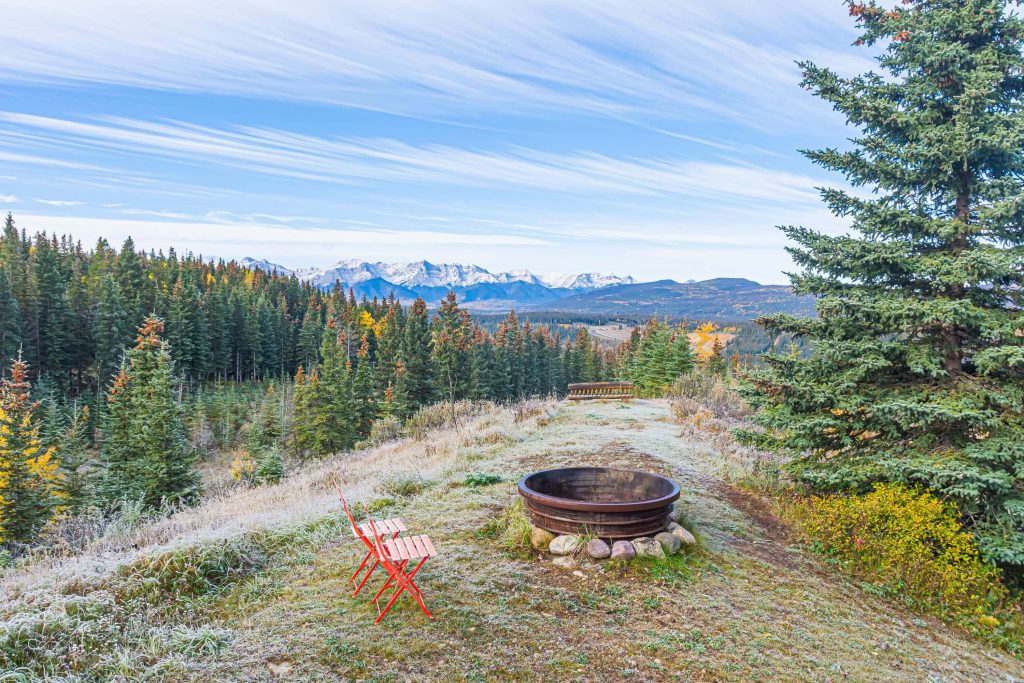
The last major transformation came with the ice age. Glaciers thousands of metres thick ground across the Rockies, carving the river valleys, ridgelines, and lake basins that now make this one of the most scenic regions in Canada. The Athabasca River valley, visible from the property on a clear day, follows a path first cut by glacial meltwater at the end of the last ice age. What you’re looking at when you step onto the deck isn’t just a pretty view. It’s the result of forces that took hundreds of millions of years to arrange.
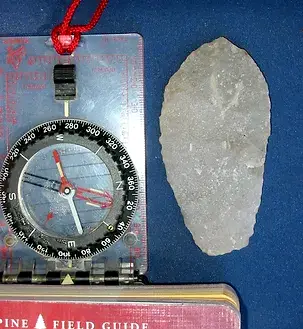
Although little evidence remains of the earliest people here, during the last Ice Age, warmer periods opened an ice-free corridor. Eurasian peoples migrated over the Bering Strait land bridge connecting Russia with Alaska, travelling alongside and through the Rockies all the way to South America. They left behind stone axe heads, hide scrapers, arrowheads and rare pictographs. Some have been found in nearby Willmore Wilderness (including by me!).
The Native peoples moved throughout the area using the rivers that provided easy access to abundant game along the broad valley. They established a network of footpaths and (later) horse trails. The first documented settlement in the area by Native peoples was at the junction of Hardisty Creek and the Athabasca River (near the existing pulp mill). Europeans started arriving around the 1700’s, spurred on by the emerging Fur Trade with the competing North West and Hudson Bay companies.
With the Fur Trade in full swing a trading post was established in the early 1820’s at the junction of the Athabasca River and Solomon Creek (on the nearby Brule Road). It remained until the 1880s when it was moved closer to Jasper. The influx of Trappers, Guides and Outfitters, establishing various trails and cabins, almost hunted out the valley.
The Dominion Forestry Act (1872) established crown owned forests for logging and game preserves. The Rangers hired to patrol these preserves, built a series of cabins a day’s horseback ride apart, connected by pack trails. There was often a valley and mountain trail to cover all weather/snow conditions. Regionally, trails and cabins came north from Sundre/Nordegg to Hinton/Brule and Grande Cache, with cabins at Gregg River and Entrance. The lower valley trails are now covered by Hwy 40 North and South whilst the higher mountain trails are used for recreation: the Bighorn Trail for hiking/biking, the Mountain Trail from Brule through Rock Lake to Grande Cache for horse guiding and outfitting.
Shortly after Canada started establishing National Parks, Jasper Park was established in 1907. This brought tourists, guides and wranglers. It also meant the Native peoples in Jasper Park were moved to a new settlement of Prairie Creek (roughly where Hwy 16 meets Hwy 40 North). The boundary of Jasper Park at that time was nearby, immediately across the Athabasca River from here. An “entrance” booth was located on the West bank of the river, across a ford which is where this new, small settlement got its name, “Entrance”, both the entrance to Jasper Park and the start of the Rockies.
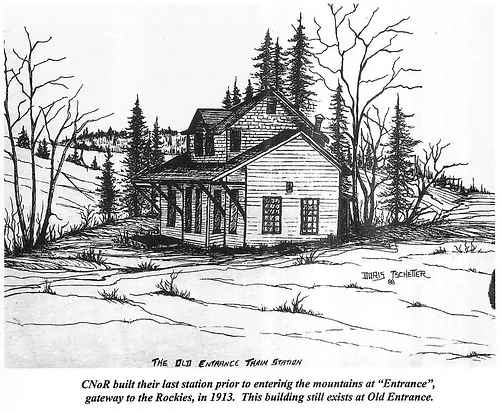
In conjunction with National Parks and tourism, rail lines were being built. CN and CPR were building lines on either bank of the river, reaching this area in 1916/1917 and included an “Entrance” station.
When the rail lines amalgamated into one the “Entrance” station was abandoned (it is now part of the Old Entrance B and B). The Jasper Park boundary was changed with the discovery and mining of coal at Brule. The settlement was thus no longer an entrance and was renamed “Old Entrance”. Entrance became the name of a new community across the river.
More guides and trappers moved into this area now outside the park where restrictions were less, this became the frontier “cowboy culture” which exists to this day. Residence with names like Montana Pete, Curly Philips, One-eyed Jack have given this area many, many colorful stories.
In its heyday over 125 people lived in Entrance, with a store, hotel, restaurant and laundromat. It boomed until the advent on the automobile, the growth of forestry and pulp mills and establishment of Hinton proper in the 1950s.
Written by: Maggie Ellen
Geologist & Local Resident
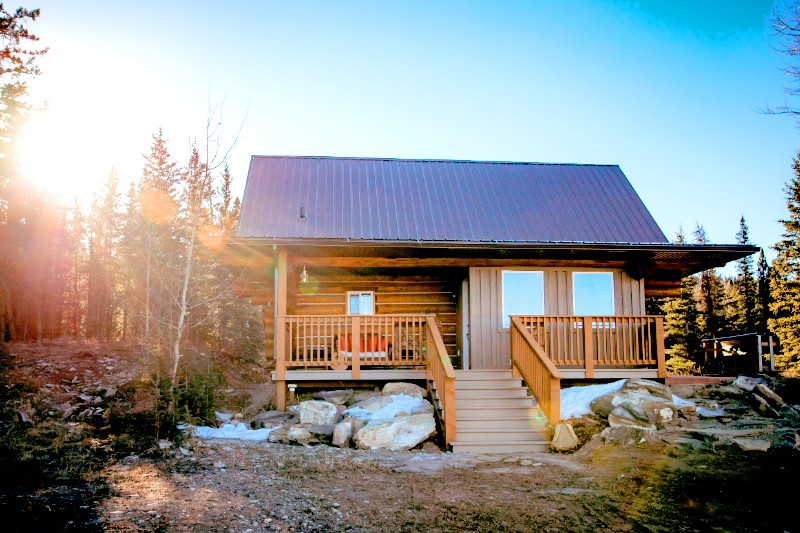
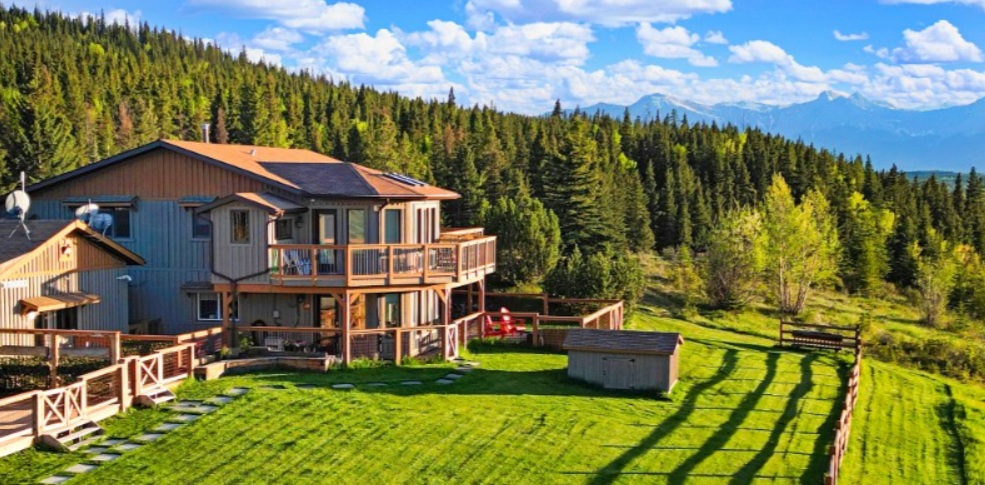
Rocky Mountain View BnB sits on land that has seen fur traders, railway builders, coal miners, park rangers, and mountain guides pass through. The property was originally built in the early 20th century as a homestead, part of the wave of settlement that followed the establishment of Jasper National Park in 1907. That pioneering spirit is still part of the fabric here.
Today, the property offers something those early travelers never had: a log cabin, private suites, cedar hot tubs, and mountain views that stop you mid-sentence. But the history hasn’t gone anywhere. The same Athabasca valley the Klondikers followed north is visible from the property. The same ridgelines the Rangers patrolled on horseback are now the hiking and biking trails you can access the same day you check in.
Whether you’re looking for a Hinton B&B with easy access to Jasper, a cabin rental near Hinton, Alberta for a long weekend, or a mountain B&B that offers genuine peace and quiet away from the crowds, Rocky Mountain View BnB is the place. We’re 45 minutes from the town of Jasper, 10 minutes from Hinton, and a short drive from William A. Switzer Provincial Park. The location puts you at the centre of some of the best hiking, wildlife watching, and mountain scenery in Alberta, without the noise and traffic of staying inside the park.
The history of Entrance is the story of people who recognized a remarkable place and decided to stay. We invite you to do the same.